


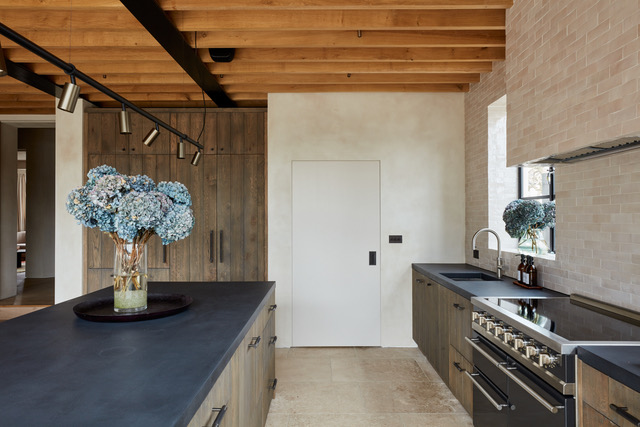
Galley kitchens – the best colours, storage and appliances
If you’re not blessed with a huge kitchen, it doesn’t mean you can’t be creative with the space.
We’ve already shown nine fabulous galley kitchen layouts to help make the most of your room.
While you’re working out the best layout option for your kitchen, or if you want an upgrade for your galley rather than a full overhaul, there are other options to consider.
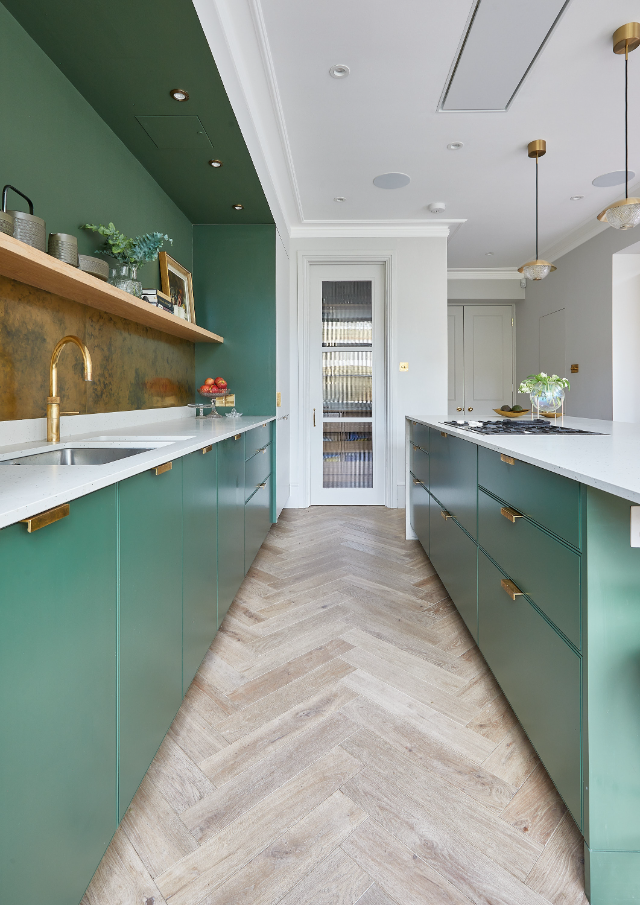
What are the best colours for a galley kitchen?
Light or neutral colour schemes are recommended for small galley kitchens, as they help to create the illusion of space.
“If you’re looking to make a statement, try incorporating colourful accents to inject some creativity into your design,” says Jen Nash, head of design at Magnet.
“But that does not mean you cannot experiment with a darker colour palette. You can incorporate darker colours by using lighting to enhance the space. Different lighting conditions can affect how a dark shade looks in your kitchen. Natural light, artificial light, and the direction of light can all influence the perceived colour.”
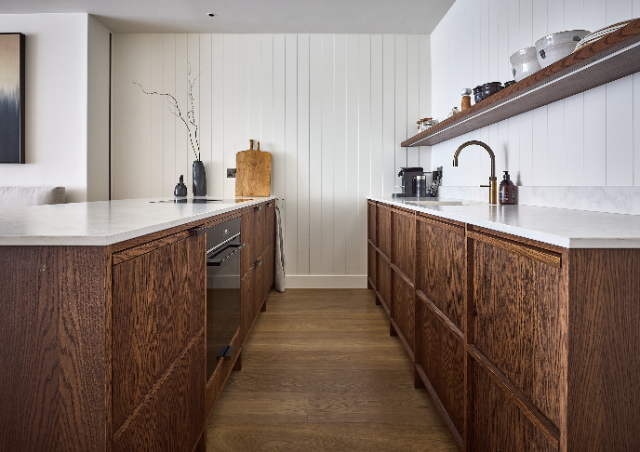
How can I maximise storage in a galley kitchen?
For a functional kitchen that lacks space, creating storage can seem like a challenge. However, there are always plenty of storage solutions you can make work.
“Impressive ceiling height is something we are lucky to have in many British period homes, so let’s use it. Our cabinetry offers tall units and stacking configurations to help you exploit the height of the space, creating elegant proportions and drama. Finding a place for those items that need a place but are not necessarily accessed every day,” says Jen.
“Alternatively, larders are incredibly functional and can be designed to suit your needs. Often with an array of features available to make whatever space you have work best for you. From pan drawers to open shelving and wine racks to spice drawers, a larder cupboard is perfect to enhance the practicality of your kitchen.”
Open shelving can be a great way to store items, and you can also make them decorative.
Jen adds, “Fill them with ornate jars, beautiful crockery and your best kitchenware, while putting your less aesthetically pleasing items in closed cupboards.”
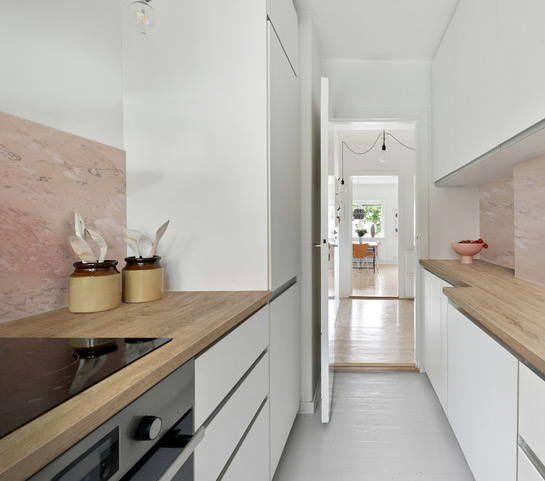
What appliances are suitable for a galley kitchen?
Since space is limited in a galley kitchen, it’s important not to have too many appliances. It’s also worthwhile looking for built-in appliances, as these give your space a streamlined feel.
Consider whether it would be possible to move your laundry appliances to another area. For example a bathroom, and edit countertop appliances down to those you use every day.
“You could hide appliances in cupboards or larders. Especially those that are not frequently used or that you prefer to keep out of sight,” suggests Jen.
“But you should ensure that the larder has enough depth, width and height to accommodate the appliances you want to store.
“If you are storing appliances that generate heat or require ventilation, such as microwaves or coffee machines. Ensure that the larder has adequate ventilation to prevent overheating and allow air circulation.”
Specifying appliances for a galley kitchen requires careful thought, advises Tom Howley, design director at his eponymous kitchen company.
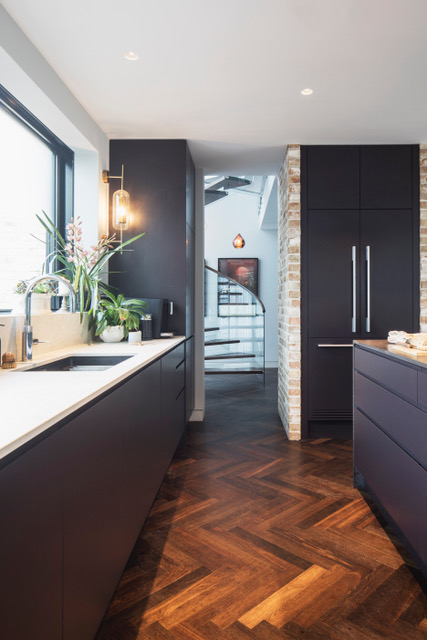
“If you have set aside the space for a walkway of around a metre, standard oven or fridge doors will compromise a considerable portion of that space when opened. A key tip is to fit built-under appliances,” he says.
“This will provide lots more workspace, leaving views across the kitchen at eye level uninterrupted. Built-under draw fridges and dishwashers work brilliantly, as well as ovens with doors that slip back underneath the oven itself.”
How can you design a small kitchen in galley style?
Smaller kitchens are often already laid out in a galley style, but this doesn’t mean they can’t be stylish.
A galley kitchen is actually a great use of space for a smaller kitchen, provided you have the right amount of storage and useful appliances.
Richard Davonport, Managing Director at Davonport, says: “The enduring appeal of a galley kitchen lies in its efficiency. However, the most successful examples today are those that soften that practicality with a sense of warmth and liveability.
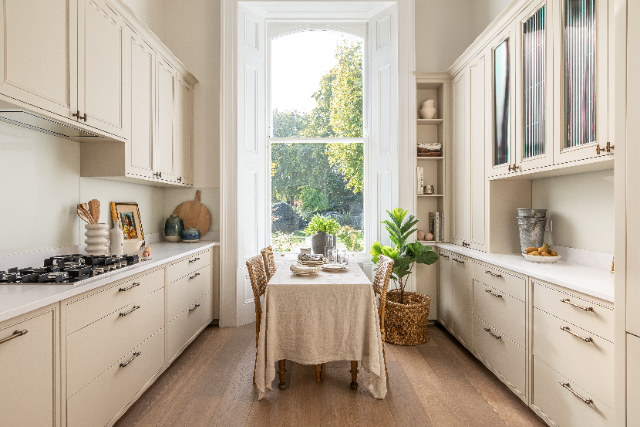
“Proportion and symmetry play an important role in achieving this balance. Cabinetry that runs evenly along both sides helps to frame the space and create a sense of order. While classic detailing, think panelled doors, subtle glazing, or carefully chosen hardware, adds depth and character. All without overwhelming the layout.
“The result is a kitchen that feels structured yet relaxed, where traditional elements sit comfortably within a highly practical framework.
“Light is another defining factor. Positioning a dining space or focal point towards a window draws the eye through the room and enhances the sense of openness. Meanwhile a softer, neutral palette allows natural light to move freely across surfaces, reinforcing that feeling of space. In this way, the galley kitchen becomes more than an efficient working environment. Therefore evolving into a considered, welcoming room that supports both cooking and everyday living with equal ease.”
Can you have a kitchen island in a galley kitchen?
Kitchen islands are a desirable feature in the modern kitchen. Not only are they a dining and social hub of the space, but they’re also an opportunity for extra worktop space and much-needed storage.
Tamsin Holland, product development manager at Paula Rosa Kitchen adds: “Putting an island to a galley kitchen can work beautifully, but only if the proportions are right.
“In slightly wider layouts, a slim island or compact prep table can add valuable surface space. However, If space is tighter, a peninsula often works better than a full island, giving you the same functionality.”
Steve Larkin, kitchens expert and CEO of Kitchen Door Hub agrees: “A peninsula at one end of the kitchen will provide additional workspace for food preparation and accommodate other appliances. It can be surrounded by stools so used for dining, too.”
“Another alternative is a portable kitchen island. This means you have extra preparation or entertaining space when it’s required. It can then be stored away or moved aside when you need the extra space in the kitchen, something that would be impossible with a permanent kitchen island.
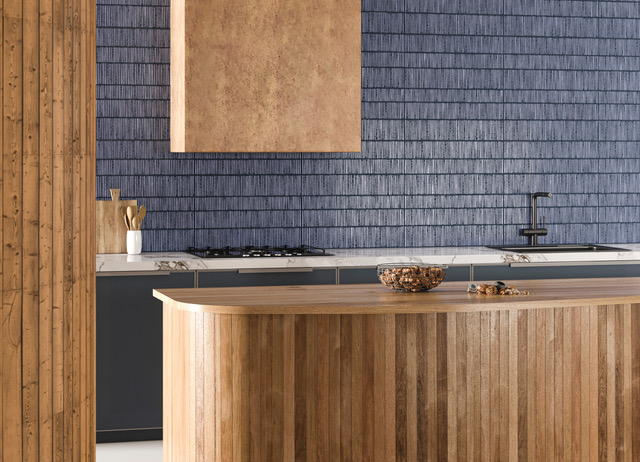
“The right shape is also crucial. Avoid installing a blocky, rectangular island, instead long, narrow or oval-shaped islands work better as they have softer edges and do not interrupt the flow of traffic as much.
“Maximise the space by ensuring it can be used for more than just eating by adding extra cabinets or even a hob. If you have seating, ensure it’s tucked away to save space.”
Header image: Photography by Chris Snook for Main
READ MORE