Image credit: Annie Sloan
Paint effects you need to know about
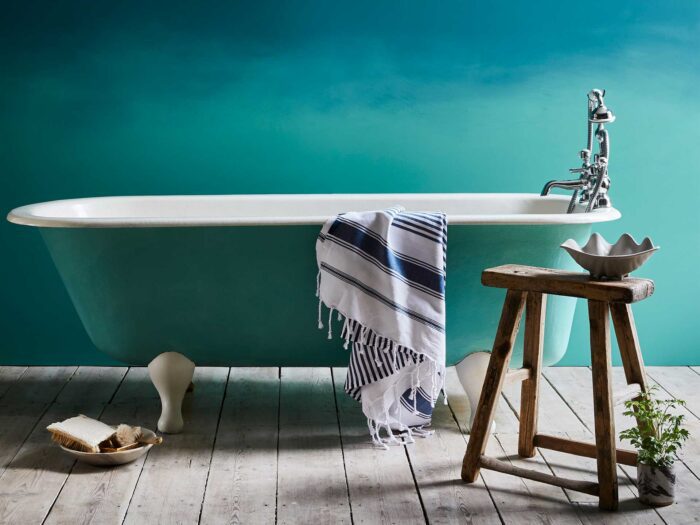
Go for ombre paint effects
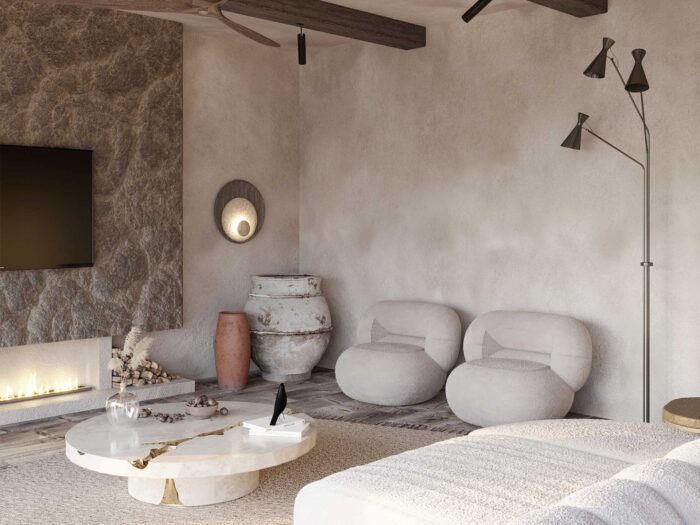
Add texture and depth with limewashing
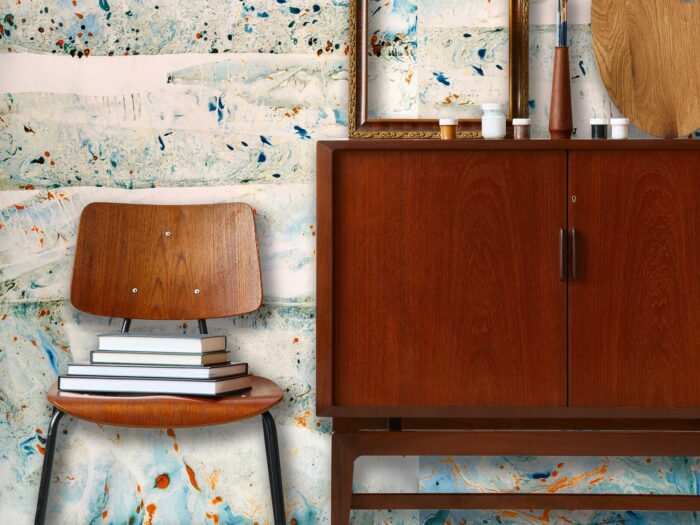
Think about marbling paint effects
Try your hand at stencilling

Paint subtle pops of block colour
Forget feature walls of complete coverage.
Pops of colour used in clever ways can add so much detail and interest to your interiors.
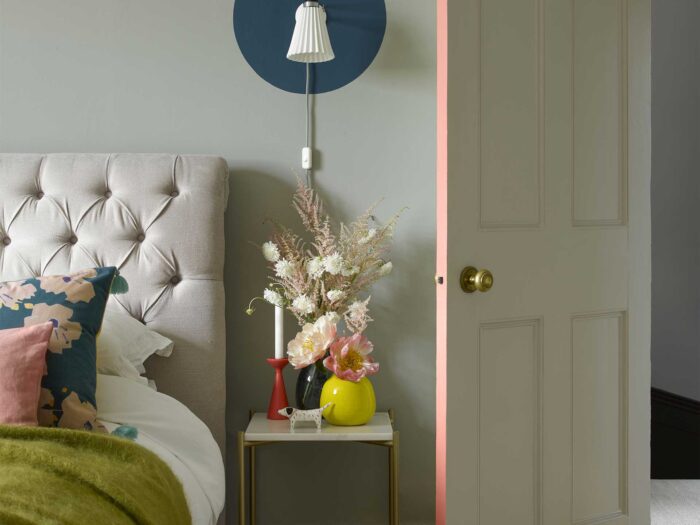
Benjamin Moore (pictured) has painted the edge of the door in their warm shade of Coral Gables, which will bring a little bit of joy every time you open it. It’s an affordable effect, as you can use leftover paint from another project or a tester pot.
Bright yellow is another popular colour for door edging.
You can also highlight different areas of the room with paint, here Benjamin Moore has painted a circle of Blue Danube to add focus to an otherwise plain light fitting.
More moments of colour can be brought in with different coloured cornicing or picture rails.
A painted fireplace is a great way of adding a focal point to a room, while painting a block behind your photos and artwork can bring a fun element to your framing.
Another way to add a contrasting colour is to paint a scalloped edge around a window frame (you can do this freehand or use a scallop edge stencil).
Increase height with a lacquered ceiling
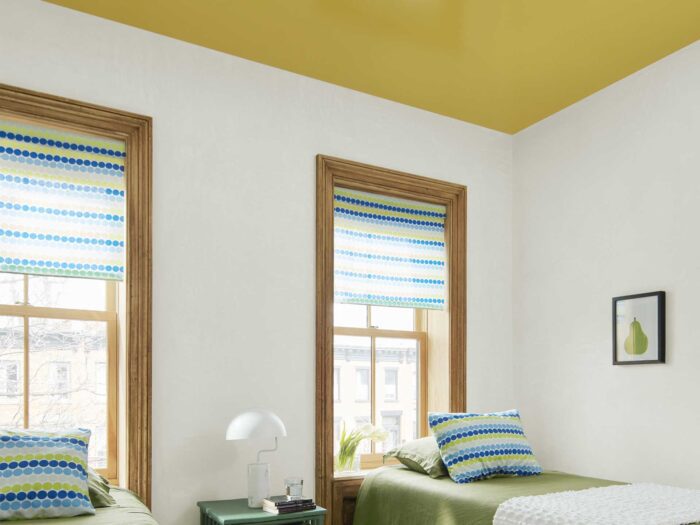
Gloss paint has been around for centuries and was known for its quality of bouncing light around a room, (which was especially important when the main source of light was candle).
Gloss paint was typically more expensive, and signified wealth, due to the cost of the paint and the numerous coats it needed.
For a long time, gloss fell out of favour, before it became a skirting board favourite, largely because they’re more durable in a high traffic area.
We’re now seeing its revival on walls and ceilings to give a mirror-like finish.
Given the breadth of paint colours and increase in technology in modern paint, gloss is relatively easy to apply and can add drama to a room, while still bringing reflective qualities.
If you’re applying gloss to the walls yourself, use a brush and keep your brush strokes consistent. Don’t load the brush too heavily to avoid drips.
For a more opulent shiny finish, you could use lacquer.
Lacquer is a clear or coloured varnish that gives a very durable finish when dried, although it is more expensive and labour intensive, and one best left to the professionals.
Go folksy with murals
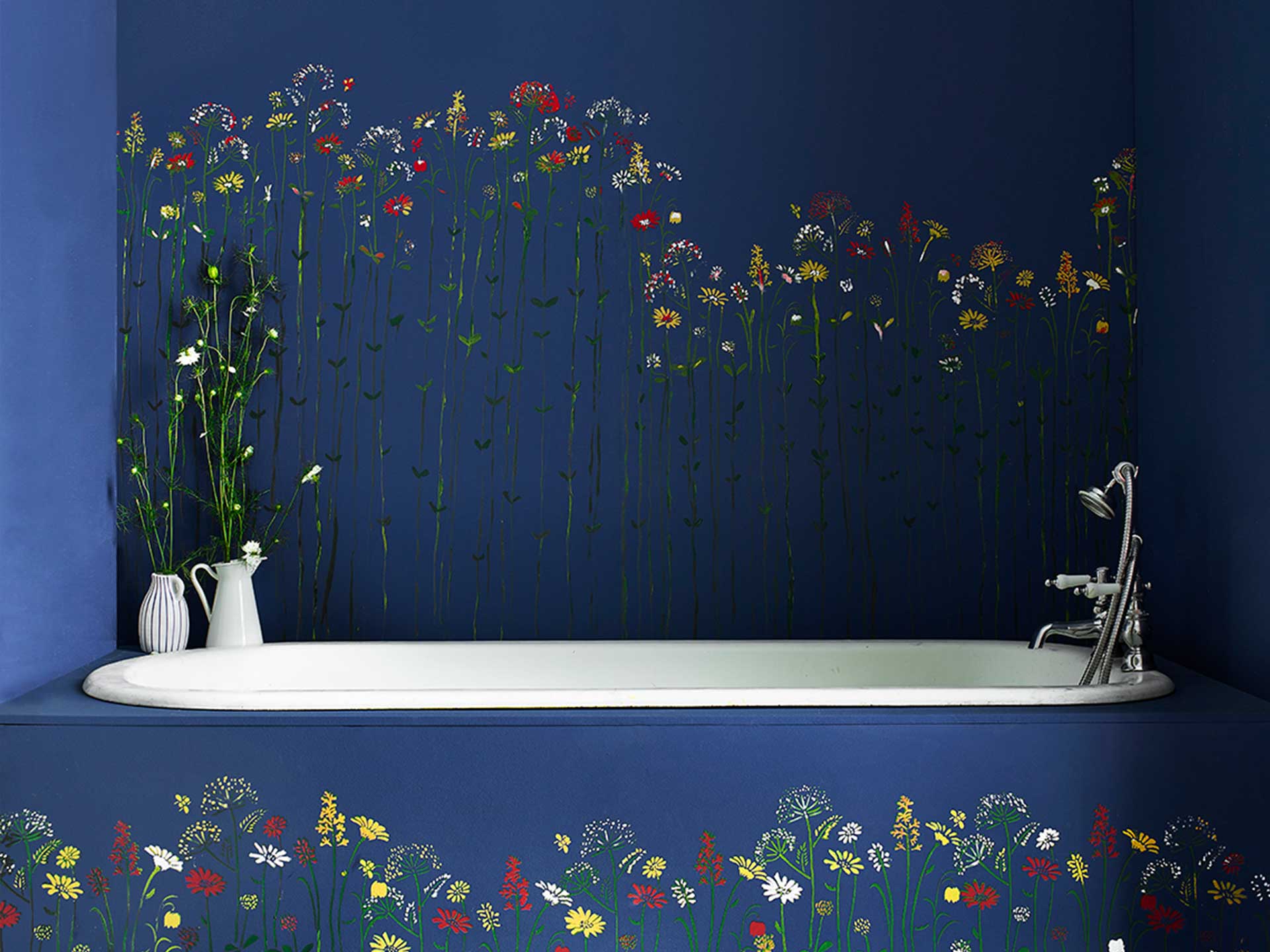
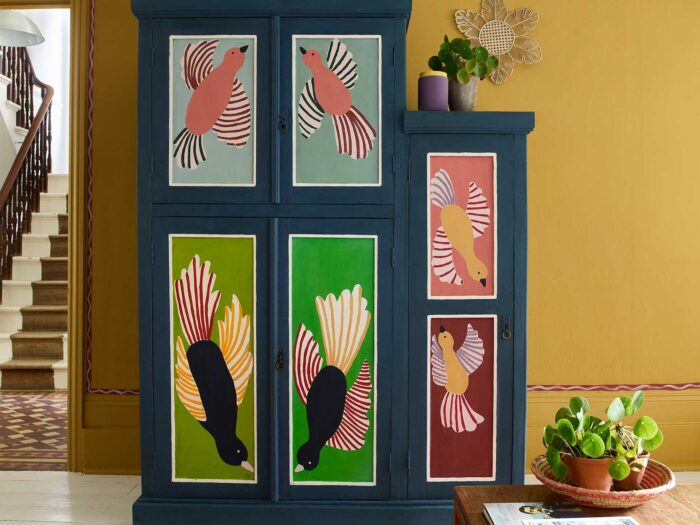
Bring fun, playfulness and a hint of the whimsical into your home with a folk-style mural.
Once reserved for children’s bedrooms, murals are now being seen all over the house.
Annie Sloan is a big fan of using them to bring old furniture to life, and giving you total freedom with some free-style painting. You could start with furniture and when you’ve gained enough confidence take your paintings onto the walls.
Anna Jacobs (aka The Colour Doctor) is a masterclass in how colourful murals can transform a home and regularly posts timelapse videos of how she’s transformed her rental flat in London into a joyful riot of colour with her amazing murals.
If you’re stuck with what to paint, Pinterest is full of ideas to get you started. Always mark out your design with a pencil first.
If you don’t want to paint the mural yourself, but love the style, Wallsauce, OhPopsi, and Clarissa Hulse are all great places to check out for easy to put up, bespoke murals.
Create cosy interiors with colour drenching
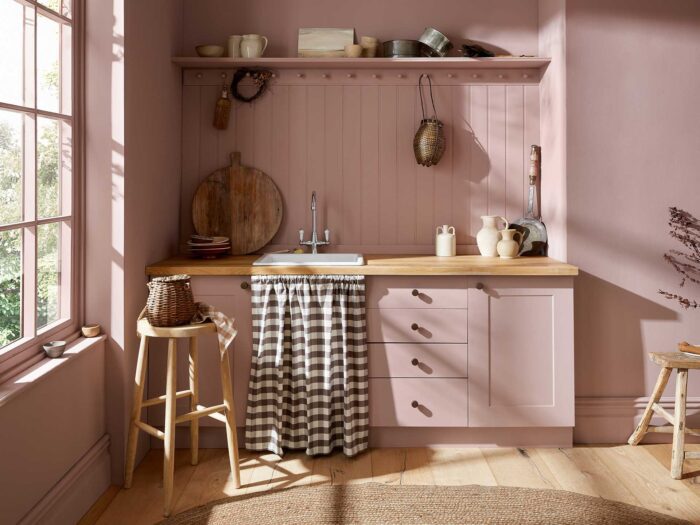
Colour drenching is the paint effect movement of the moment and with good reason: it truly elevates spaces.
More of a technique than a trend, colour drenching is when one colour is applied to every surface, think walls, ceilings, woodwork, doors, door frames and skirting boards, and even built-in cabinets and radiators.
Colour drenching gives a room the calming sense we all crave by reducing visual noise and helping a room appear bigger.
A lighter paint colour will open up a room and give the illusion of height, while a darker hue can create a cosy and inviting feel.
To bring an interesting element to a room, you could buy emulsion and gloss in the same colour.
Paint the walls with emulsion and the ceiling with gloss to take your colour drenching to another level.
Play with trompe-l’œil
The Royal Academy of Arts describe a trompe-l’œil as “French for ‘to deceive the eye’, and an art historical tradition in which the artist fools us into thinking we’re looking at the real thing”. We’re seeing it being brought into our interiors more increasingly, as there’s a sway away from perfection and towards playfulness.
Of course, trompe-l’œil lends itself to being as elaborate as you like.
Creating whole scenes, but a simple way of bringing it into your home, is with panelling.
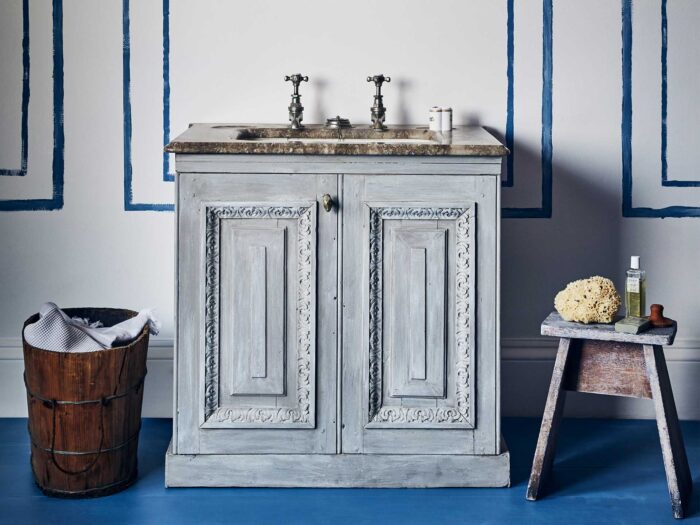
Use masking tape to make your panels, or you can go freehand, as Annie Sloan has done below, and mark out your panels.
Have two to three shades of paint, including one light and one dark.
Use the lighter paint on the edge of the panels to create highlights of where the light is coming from and use the darker paint for the shadows.
Essentially you want to create a 3D effect. Laurence Llewelyn Bowen is a big fan of this technique and has created a video you can follow to paint the look in your own home.