


Transform Your Home for Christmas Cheer
Holiday home decor can bring Christmas cheer into your home without taking over every room or requiring an entirely new collection of decorations.
These ten ideas combine welcoming entrances, thoughtful lighting, meaningful ornaments, and comfortable gathering spaces.
Start with what you already own, choose a few places to highlight, and build a festive home that feels like yours
Where should you start with Christmas decorating?
Start Christmas decorating with the spaces you see and use most: your entrance, main gathering room, and dining area.
Choose a simple color palette, gather your existing seasonal decorations, and decide which features deserve attention before adding anything new.
This gives your rooms a shared direction without making them identical.
Before you begin, make a quick plan:
- Choose your anchors: Select two or three focal points, such as the tree, front door, and dining table.
- Sort your collection: Separate favorites from damaged pieces and decorations you no longer enjoy.
- Protect everyday function: Keep walkways, seating, and frequently used surfaces accessible.
1. Choose a palette that works with your home
A coordinated palette helps festive decorations feel connected to your existing furniture rather than layered on as an afterthought.
Look at the colors already present in your rugs, curtains, and upholstery.
Then choose two main holiday colors and, if you like, one metallic accent.
Classic red and green can sit comfortably alongside warm wood.
Cream, forest green, and muted gold offer a softer direction, while white and silver suit a winter wonderland theme.
You do not need to replace ornaments that fall outside your palette; group those meaningful pieces together so they feel intentional.
Repeat your chosen colors through ribbon, textiles, and small accents. Repetition creates continuity without requiring matching decoration sets.
2. Give your entrance one welcoming focal point
Your entrance sets the mood before guests reach the living room.
Choose one feature to lead, whether that is a wreath, a decorated console, or a generous ribbon tied around an existing basket.
Leave enough space for coats, bags, and the practical business of coming home.
For a small entryway, hang a wreath on the inside of the door and place a compact arrangement on a shelf. In a larger space, gather branches in a sturdy vessel and add a bowl for keys nearby.
A familiar doormat can stay; not every functional object needs a Christmas replacement.
Carry one color from the entrance into the next room to make the transition feel natural.
3. Decorate your tree with layers and personality
The tree often becomes the centerpiece of Christmas homes, but its character comes from more than a coordinated ornament collection.
Begin with lights, then add ribbon or garland if you use it.
Place larger ornaments throughout the branches before filling gaps with smaller pieces.
Give treasured decorations prominent positions rather than hiding them because they do not match.
A handmade star, an ornament from a trip, or a child’s first creation makes the display personal. Repeat a few colors around those pieces to connect the whole tree.
Step back occasionally to check the balance from the doorway and your usual seat.
The tree should look good from where you actually enjoy it.
4. Build a gentle glow beyond the tree
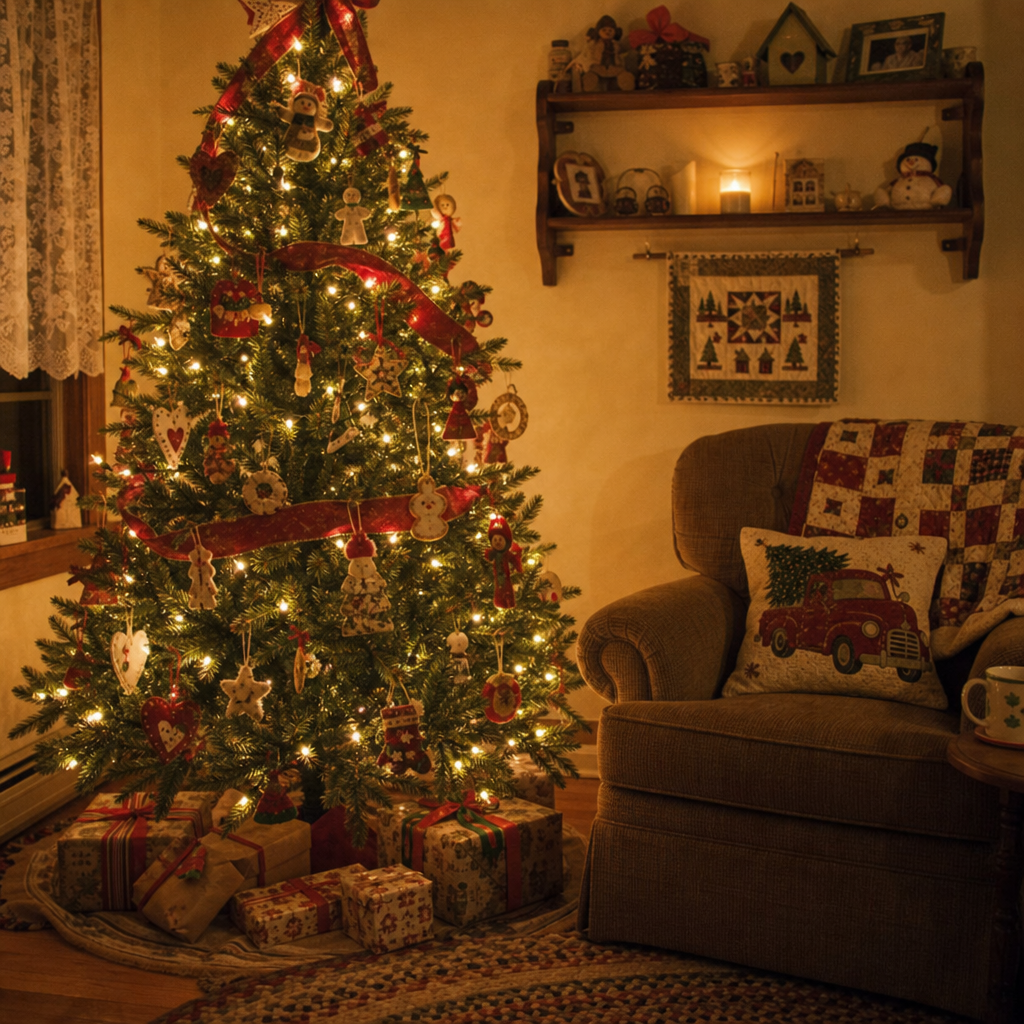
Lighting deserves its own decorating plan, especially if your rooms feel unfinished once the tree is lit.
Rather than adding a bright feature to every corner, create small pools of light around the places where people gather.
Keep useful lamps available for reading, serving food, and conversation.
Try battery-operated candles on a sideboard, a lighted decoration on a shelf, or a lantern beside an armchair.
Choose a similar light tone where possible so neighboring displays feel connected.
Check the effect after dark before deciding whether you need more.
Arrange cords away from walking routes, and follow each product’s instructions about placement and use.
A festive room should remain easy to move through.
5. Style your mantel or shelf with breathing room
A mantel is an obvious decorating spot, but a bookcase shelf or console can serve the same purpose.
Start with one larger element, such as a wreath, framed seasonal artwork, or a favorite decorative object.
Build around it with smaller pieces rather than filling the entire surface.
Vary the heights, and leave visible gaps between groups.
A cluster of miniature houses might sit at one end, balanced by a taller ornament at the other.
If you use garland near a working fireplace, follow the fireplace manufacturer’s clearance guidance.
No mantel?
Decorate the top of a low cabinet instead.
The goal is a focal point, not a particular architectural feature.
6. Add winter texture where you relax
Soft furnishings can make a room feel seasonal without introducing many decorative objects.
Move a favorite throw onto the sofa, bring out textured cushion covers, or place a small basket of blankets near your gathering space.
Work with fabrics you enjoy touching and can realistically maintain.
Choose texture as carefully as color.
Knitted, woven, quilted, or softly brushed finishes each offer a different look, so a few contrasting surfaces can provide interest without busy patterns.
Keep enough seating clear for people to settle comfortably.
These changes also suit rooms where you want less overt Christmas styling.
A bedroom or reading corner can feel wintry while remaining calm and uncluttered.
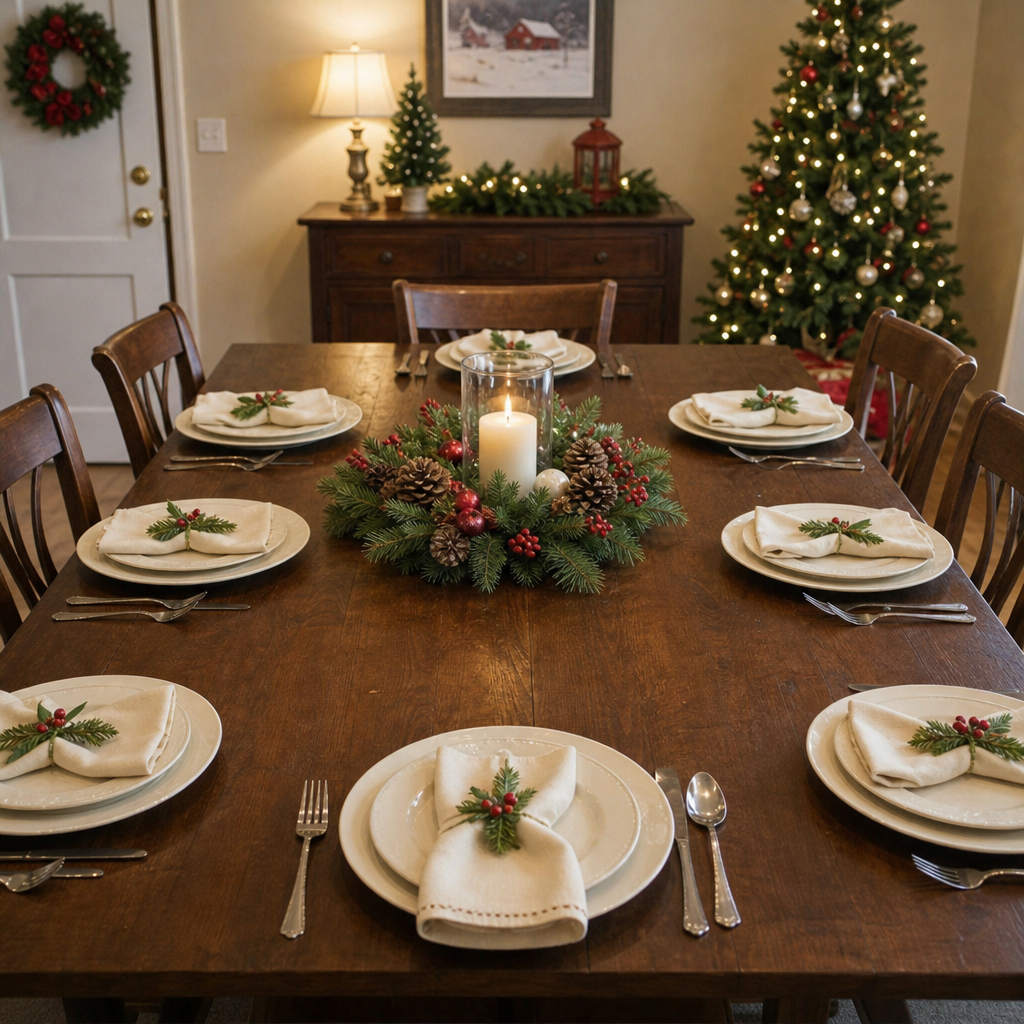
7. Set a festive table that still works for dinner
A beautiful table should leave room for plates, serving dishes, and conversation.
Start with your everyday dinnerware, then add a runner, cloth napkins, or a small centerpiece in your chosen palette.
Seasonal decorations do not need to occupy every place setting.
Keep arrangements low enough that guests can see one another.
If your table is narrow, arrange a few small decorations down the center rather than using one wide display.
Move the centerpiece to a sideboard when sharing dishes need the space.
Simple finishing touches can make ordinary meals feel special, too.
Fold napkins neatly, set out handwritten place cards for a gathering, or reserve a favorite serving bowl for December dinners.
8. Bring small touches into everyday corners
Holiday home decor feels more personal when it reaches the places you naturally pause throughout the day.
That might be the kitchen windowsill, your desk, or the shelf beside your morning coffee.
Choose one modest addition rather than trying to decorate every surface.
A seasonal tea towel can brighten the kitchen without reducing preparation space.
A favorite Christmas card displayed near your desk can offer more meaning than a large arrangement.
In a guest room, a folded blanket and a small ornament may be enough.
Let these quieter touches complement the main displays.
Keeping some rooms lightly decorated gives your eye a rest and makes the larger focal points feel more special.
9. Make room for family traditions
For many families, dream homes at Christmas are not the most polished ones; they are the homes where familiar rituals have room to happen.
Give shared activities a place in your decorating plan.
A basket of seasonal books or a spot for children’s artwork can become part of the display.
Try one simple project together:
- Create paper decorations: Make stars or chains in colors that echo the rest of the room.
- Display a growing collection: Arrange family ornaments where everyone can help choose their position.
- Save the story: Add a dated note to a handmade decoration before packing it away.
Leave some decisions open for others. Shared ownership matters more than perfect symmetry.
10. Finish with a manageable outdoor welcome
Outdoor festive decorations can be simple: a wreath, a ribbon on a planter, or a carefully placed lighted feature.
Choose something that suits your entrance and does not obstruct the door, steps, or handrail.
A clear arrival route matters more than an elaborate display.
Use decorations and electrical products intended for outdoor conditions, following their instructions.
If you prefer to avoid lights, repeat your indoor palette through bows, weather-suitable ornaments, or existing porch accessories.
Think about taking everything down as you put it up.
Keep packaging together and avoid arrangements that will be difficult to reach later.
A manageable display is easier to enjoy throughout the season.
How do you keep the finished space comfortable?
Keep your decorated home comfortable by checking how it functions during an ordinary day.
Sit on the sofa, prepare a meal, open the front door, and walk through your main routes.
Move anything that interrupts those routines, even if it looked lovely in the initial arrangement.
You can also stop before every box is empty.
The decorations you leave out give your favorite pieces space to shine.
Whether your style is a sparkling winter wonderland or a few well-loved ornaments, the best finishing touch is room to enjoy it together.