


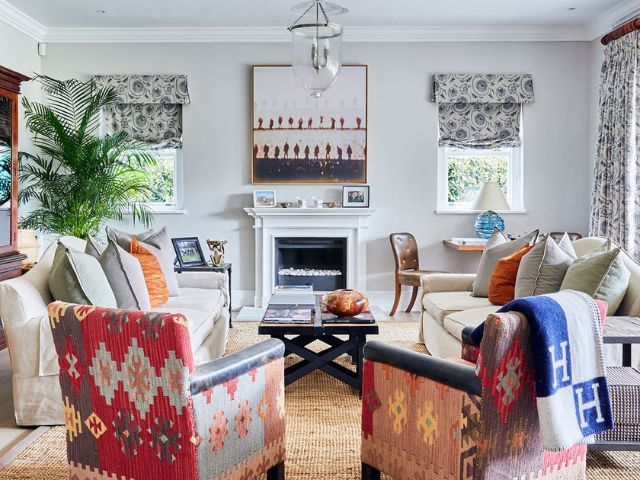
Image Credit: Matthew Williamson
Battle of the clashes – 11 ways to cohesively clash your interior decor
Move over pattern clashing, there’s a new mix-and-match decorating trend taking over our homes.
Interior designers are ditching perfectly coordinated schemes in favour of combining contrasting woods, metals, stone, tiles and tactile finishes to create spaces with real depth and character.
It’s a look that’s less about following rigid rules and more about embracing thoughtful contrast.
Sleek polished surfaces sitting alongside woven textures, warm timbers softening industrial concrete, and different metals happily mingling in the same space.
Done well, these combinations feel cohesively collected, adding warmth and personality that matchy, matchy interiors simply can’t achieve.
“When we think about clashing in interiors, pattern is usually the first thing that comes to mind, but it’s far from the only way to create contrast in a space,” explains Victoria Robinson, style and trend expert at Hillarys.
“Some of the most stylish schemes combine different materials, metals and finishes to add depth and personality.
“Mixing polished marble with raw concrete, warm brass with cool chrome, or glossy tiles with tactile natural textures can make a room feel much more layered and interesting.
“When it’s done thoughtfully, clashing isn’t about creating conflict, it’s about creating balance and character.”
Mike Whitfield, luxury interiors expert at Lusso, says interiors have long aligned with the fashion playbook, and much like clashing prints in an outfit, clashing patterns and materials can be used to create visual interest, depth and individuality within your home.
“In architecture and design, using contrasting materials is a principle known as ‘deliberate material juxtaposition’, where opposing finishes are paired to highlight each other’s unique qualities,” he explains.
“By creating friction between materials, whether that’s time-worn and pristine, rough and smooth, or heavy and light, you create a sense of creative tension that makes us notice and appreciate the space around us.”
The key is knowing how to mix without it feeling messy. Ready to embrace a little decorative contradiction? Here’s how to cohesively clash every finish in your home.
Find something that ties everything together
Every successful clash needs a little common ground to make the whole scheme feel much more pulled together.
“Whenever I’m mixing different materials or finishes, I make sure there’s a common thread running through the scheme,” explains Victoria.
“That could be a shared colour palette, similar undertones or even repeated shapes and silhouettes.”
Victoria says marble, concrete and metallic finishes can work beautifully together if they all sit within the same warm or cool colour family.
“Having that sense of connection helps the space feel intentional rather than random,” she adds.
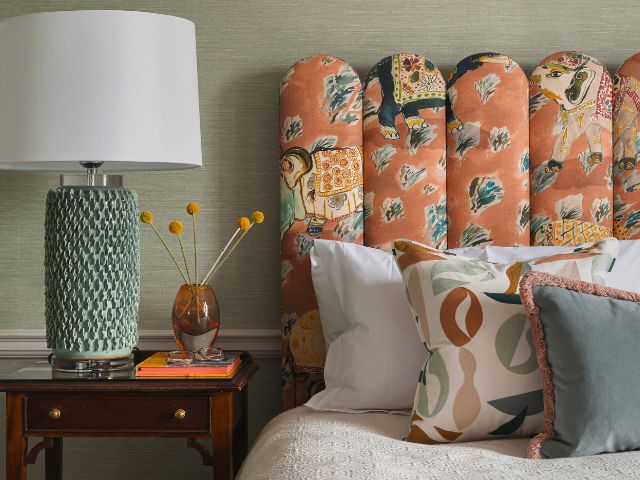
Let contrasting materials complement each other
A room can quickly start to feel busy if every surface is competing for attention, so it’s important to think about balance.
“If you have a dramatic marble worktop or a bold patterned tile, pair it with simpler textures nearby to give the eye somewhere to rest,” Victoria suggests.
“I like to think of clashing materials as creating a conversation within a room.
“Each element should bring something different, but they should still work together to tell the same story.”
Learn how to clash your lighting
Lighting is another place where matching sets have officially had their moment.
Mixing different styles can make a room feel far more layered and lived in.
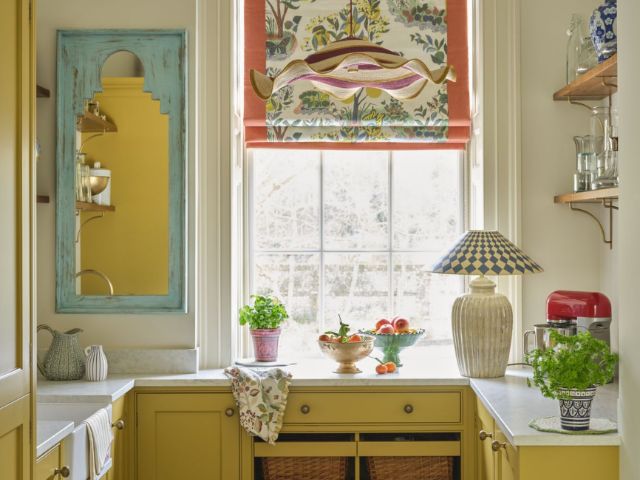
Sue Jones, creative director and co-founder at OKA says there’s a lot to be said for the charm that mismatching lamps can bring to a room.
“If you’re more of a maximalist like me, a variety of lamps and shades is a great way to bring in more colour and pattern,” she explains.
“You can also play around with matching lamp bases and mismatched shades or vice versa, but whichever aesthetic you go for, remember to vary the lamp heights around the room to add visual interest.”
Layer up your rugs
Why stop at clashing finishes? Layering rugs is another designer trick that makes a room feel warmer and more relaxed.
“One of the most transformative tools in home styling is a rug, and layering two or three of them is a clever way to create a more lived-in look,” explains Sue.
“It’s not a new idea – people have been layering rugs for years, mostly for warmth and comfort.
“Now we’re seeing it as a decorating choice that allows you to add character and play with different patterns and textures.”
Sue says there’s no right or wrong way to do it, it all depends on the aesthetic you like.
“A neat, centred stack creates a formal and polished look, while overlapping two or three rugs off-centre feels more relaxed,” she continues.
“As a guide, the bottom rug should be at least a third larger than the next one to keep the layers well-framed.”
Clash your flooring through ‘zoning’
Open-plan living doesn’t mean one-size-fits-all flooring.
Clashing different materials can create subtle zones, adding definition without sacrificing flow.
“The ‘zoning’ technique is often thought of as something for wall colours, but it can also be applied to floors,” explains Graeme Shelley, managing director at Factory Direct Flooring.
“It involves pairing two different floor types together in the same open-plan room to create visual ‘zones’.
“The ‘zones’ could be anything from a dining nook in a kitchen, or an entryway into a living room.”
Graeme says the secret to getting this right is avoiding anything that’s too much of a near-match.
“If you pair a wood-effect vinyl in your entryway with real wood in your living room, it will always catch your eye for looking slightly ‘off’,” he explains.
“Instead, choose materials that complement each other where they meet, like a limestone floor paired with real wood that picks up the darker flecks in the limestone.
“This kind of contrast feels intentional rather than accidental, and connects the two different materials.
“The same principle applies if you’re renovating one room, and need to think about how the new flooring will look when it meets the next room’s floor at the threshold,” he adds.
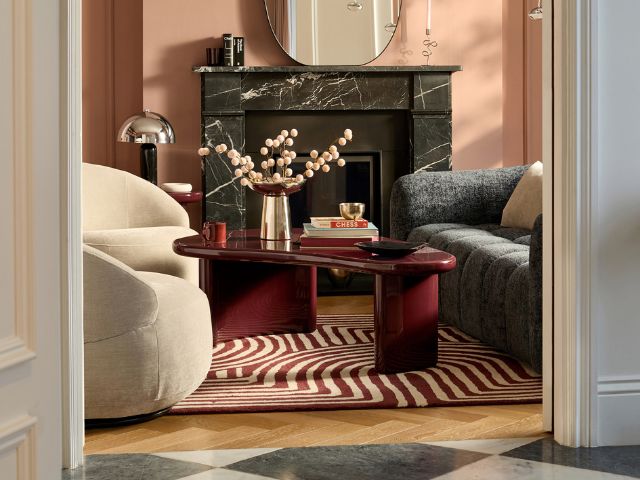
Vary the scale and proportion
The key to mixing materials successfully is resisting the urge to give everything equal billing.
By varying the scale of each finish, the contrasts feel considered rather than competitive.
“When clashing materials, think about scale,” advises Julie Gokce, senior kitchen designer at More Kitchens.
“A large expanse of one material paired with a smaller, contrasting element often works better than equal amounts of everything.
“For instance, a concrete floor with a marble island in the kitchen creates a striking contrast because the materials are used in different proportions.
“Similarly, mixing wood tones is more successful when one wood dominates and others are used as accents – for example like a large oak table with a few walnut chairs, rather than a 50/50 split.”
Chloe Barrow, head of creative interiors at Laura James advises trying to stick to a 70/30 balance when clashing two strong materials to stop them competing with each other.
“I recommend pairing one material to cover 70% of the space and weaving in your contrasting finish for the remaining 30%,” she suggests.
“For example, if you’re mixing brass handles with a chrome tap in the kitchen, add a second nod to brass through a light pendant and wall frame to help it make up that 70%.
“Pairing those contrasts ties the whole room together.”
Mix textures, not just colours
Clashing isn’t just about visual contrast – it’s about tactile contrast too.
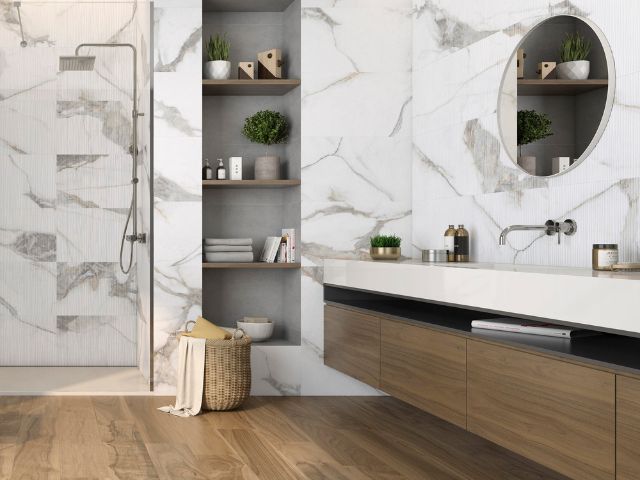
“A smooth, polished surface like marble or high-gloss tile will feel more striking when paired with something rough and matte, like exposed brick, unlacquered brass, or natural linen,” explains Julie.
“This combination of textures adds depth and interest that a single material simply can’t achieve.”
Get repetitive
A little repetition goes a long way. Repeating key tones, textures or finishes helps create rhythm and makes even the boldest combinations feel intentional.
“My top tip would be to balance the clash with consistency by repeating elements throughout the space to keep it interesting but intentional,” says Laura Deller, author of ‘Nailed It!’, @houseprojectuk.
“Instead of multiple ‘one-off’ features, find tones and finishes that you love and echo them around your home, so it feels eclectic but considered.”
Don’t forget the metals
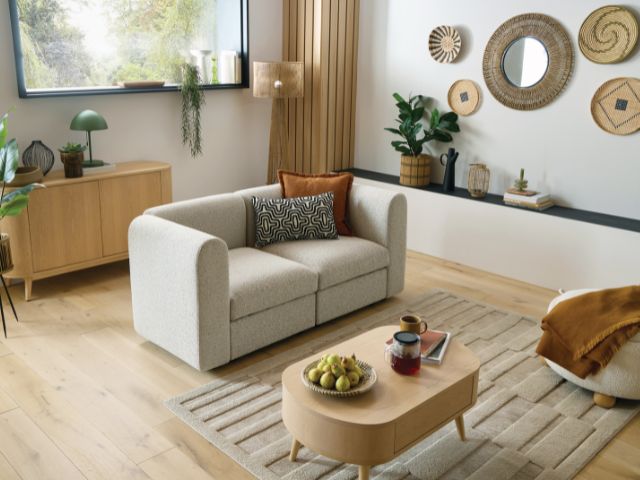
Mixing metals is another area where people often play it safe, but a room with all the same metal finish can feel a bit flat.
“Combining warm metals like brass and copper with cooler ones like chrome or nickel can add depth and richness,” explains Julie.
“The trick is to have a dominant metal and use the others as accents, and to ensure the finishes have a similar quality – for example, polished brass with polished nickel works better than polished brass with brushed nickel”.
Allow some breathing space
Clashing materials and finishes should always feel intentional – one wrong misstep can make the space look messy and unconsidered.
“One simple way to achieve cohesion when clashing is to leave a small amount of negative space where two contrasting materials meet,” explains Mike.
“Rather than cramming raw stone directly against wooden accents, allowing each material a little breathing room helps them feel distinct, ensuring the contrast looks considered and architectural rather than awkward or accidental.”
Know when to stop
The biggest risk with clashing is taking it too far.
The goal is to create a curated, layered look, not a room that feels chaotic or overwhelming.
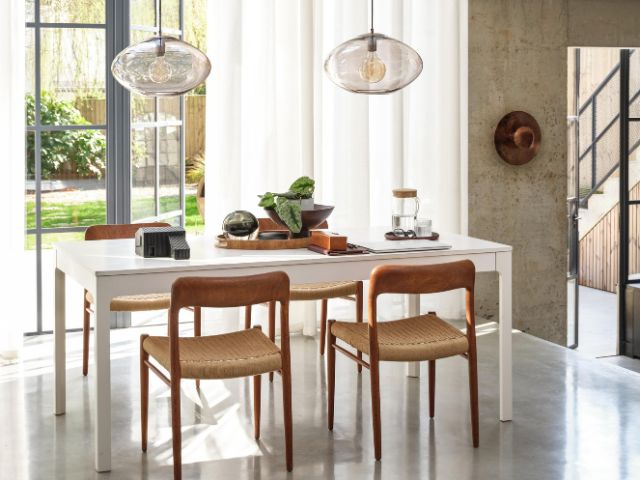
“A good rule of thumb is to limit yourself to three or four different materials or textures in any one space, and to ensure that at least one of them appears in multiple places to create a sense of flow,” suggests Julie.
“If you are in doubt, a neutral backdrop such as white walls or a natural timber floor, can provide the perfect canvas for bolder clashes to shine.”
Want more inspiration? Read: How often should you REALLY wash your bedding during summer? and 8 interior collaborations that need to be on your radar this summer. And check out Gelato interiors: 8 ways to introduce the sweetest decorating trend of the summer
READ MORE: