


Why your grass seed isn’t growing
For summer, top of many of our garden wish list is a flourishing green garden with plenty of grass to relax on, the children to play on, and just enjoy over the blissful warm days.
But, it’s often not as easy as that.
It can take a while to establish grass, and even then, sometimes moving furniture around or play equipment can expose dead grass, and getting it to grow again can be problematic.
As a result, many are switching to artificial grass – which can be a great solution, but can come with its own issues, too.
If you’re looking to persevere and to try and get your grass seed to deliver, we have some expert advice.
Why your grass seed isn’t growing
It’s more common than you might think to have grass seed not growing as you’d expect.
The good news is, it’s usually easy to correct once the reason for lack of growth has been identified.
Guy Jenkins from Johnsons Lawn Seed explains: “Most establishment failures are due to environmental conditions or aftercare, rather than the seed itself.
“Poor weather or soil conditions can cause delays in grass germinating.
“The first cause of action is to identify the issue. If the soil is compacted, gently aerate with a garden fork.
“If pests or disease are suspected, treat the problem first to prevent it from returning.
“Once the necessary steps have been taken to resolve the issue, give your lawn an overseeding.
“This will encourage more coverage, denser swords and improve the visual appearance of your lawn.”
What are the most common reasons grass doesn’t grow?
There are a wide number of reasons grass isn’t growing well in your garden – but here Guy explains the most common.
Compacted soil
“A healthy lawn will need air, water and nutrients to reach the roots.
“Soil compaction happens when soil particles are pressed tightly together, reducing the space between them.
“This prevents air, water and nutrients from moving freely through the soil, starving the grass roots below.”
Common causes of compacted soil can include:
- Heavy foot traffic or pet use – frequent walking, playing or machinery can compress the soil
- Wet weather use – walking or mowing on wet ground can push soil particles together
- Clay-based soil – this is naturally dense and prone to compacting, especially during dry spells
- Lack of aeriation – without regular aeration, the soil structure deteriorates over time
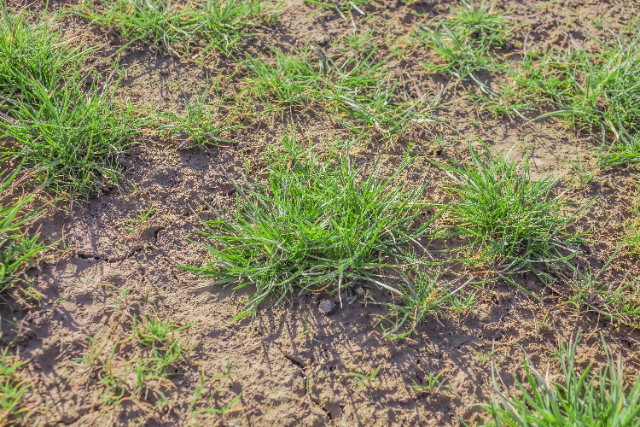
“As a result, the grass becomes thin, patchy and pale green, while puddles or muss can appear after rainfall. This is a clear sign that your lawn is struggling to breathe.”
Shade
“Shaded lawns present unique challenges.
“It means reduced sunlight, increased moisture, poor airflow and competition from trees or buildings – all of which place stress of grass plants.
“Without the right grass species shaded areas often become thin, mossy or patchy.
“Understanding grass shade tolerance is essential when choosing a lawn seed mixture.
“Some grass species are naturally better adapted to lower light levels, finer mowing heights and reduced growth rates – making them more successful in shaded conditions.”
It’s best to assess the area you’re laying the grass seed to make sure you buy the one to suit its needs.
Drought and uneven watering
“During intense periods of heat and low rainfall, grass will naturally go dormant in order to protect itself.
“You may noticed certain areas turning straw-coloured or patchy, and this is a sign that the grass is conserving energy.
“Extended dry weather or inconsistent watering can also weaken roots, allowing weeds and moss to take hold.
“Compaction and shallow watering can also cause uneven patches, as moisture fails to reach the deeper grass roots – arguably where it’s most needed.”
Pests
“A healthy lawn can be affected by a variety of pests.
“From moles tunnelling beneath the surface to grubs feeding on your grass roots.
“Recognising the signs of this early and knowing how to manage these issues will help to protect your lawn, keeping it lush, green and pest-free.”
Disease
“Grass fungal diseases can affect lawns at any time of year, depending on weather conditions, soil health and lawn management practices.
“Most diseases are triggered by stress, such as excess moisture, drought, poor nutrition, compaction or low airflow.
“Correct identification is essential, as different diseases can require different cultural controls.”
What can help grass seed to grow
As with anything, getting good results growing grass is often down to preparation.
Cheryl Harper, managing director of Greensleeves Lawn Care explains: “Loosening the top 5-10cm of soil to improve airflow and drainage creates a nice, fine surface for the seed to sit in.
“That alone can make a huge difference.
“Choosing the right seed mix is just as important.
“For example, ryegrass is great for durability and quick results while fescues cope better in shadier areas.
“When it comes to watering, consistency is key. Aim to keep the top few centimetres of soil damp, not soaked.
“Light, regular watering, especially in dry weather, works far better than heavy, occasional watering.
“It’s also important to not overdo it with the seed.
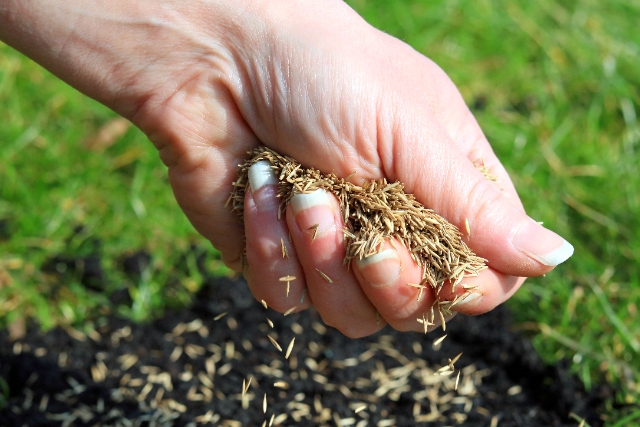
“Around 25-35g per square metre is usually about right.
“Too much seed can actually lead to weaker growth because the seedlings end up competing with each other.
“Finally, a very light covering of topsoil or compost – just a few milimetres – is a great way to lock in moisture and improve contact with the soil.”
READ MORE